You are allowed to fly in Canada with a disposable vape, but only if you carry it in your hand luggage or have it with you. Vaping devices cannot be taken in checked luggage since the lithium-ion battery inside presents a fire hazard in the cargo hold. It is forbidden to use or charge a vape while on a Canadian airline flight. You should leave the device at home if your destination prohibits vaping.
Carry-On Yes, Checked Baggage Never
The Canadian Air Transport Security Authority allows electronic cigarettes and vaping devices to be carried on board. With regard to checked luggage, Transport Canada takes the more stringent half of the rule, and the reason given is specific rather than bureaucratic.
If a lithium-ion battery short-circuits or gets overheated in the cabin the crew can deal with it at once; but in the case of the same failure in a pressurised cargo hold no one is able to see it, access it or put out the problem. This is the reason why the rule goes in this direction rather than the other and it applies to all devices fitted with a battery, including disposables.
The same policy is followed by Canada’s main airlines. Air Canada insists that vaping devices be kept in and unused within carry-on luggage, while WestJet includes e-cigarettes and lithium-ion batteries in its dangerous goods information as items that can only be carried on board.
What CATSA’s Rules Cover
-
Devices. Disposables, pod systems, vape pens and mods all travel in carry-on.
-
Spare batteries. Carry-on only, and they should be protected against short circuits. Consumer vape batteries sit far below the 100 Wh threshold where additional approvals start to apply.
-
E-liquid. Subject to the standard liquids rule: containers of 100 ml or less, in a single clear resealable bag of one litre or less. A sealed disposable counts as the liquid inside it, which on Canadian devices is well under that limit.
-
Screening. Devices go through X-ray with the rest of your carry-on. Taking them out of the bag speeds things up and avoids a secondary search.
CATSA also suggests that you should check with your airline before packing any battery-powered items in a checked bag, in reality just don’t.
Using It On Board: Never
Vaping is banned in the cabin and in the lavatories on all Canadian flights for the whole of the journey, and since smoke detectors in the aircraft lavatories pick up vapour, triggering one is regarded as a serious incident and not merely an inconvenience.
It is also not allowed to charge a vape on board the plane. When the device has a power button it should be switched off and, if it activates simply when you draw on it, it should be packed in such a way that it cannot be compressed. A device which starts working inside a bag gives off heat with no place for it to go, and this is exactly the situation that the entire set of rules is intended to avoid.
Flying Internationally: Check Before You Pack
The rules in Canada apply to your flying; they do not apply to what is allowed when you land. At several popular destinations vaping products is completely banned, and in the most strict of these places, possessing them is an offence, even if the traveller had no intention of using the device there.
| Destination | Status | Notes |
| Thailand | Banned | In force since 2014. Enforcement against tourists is active. Fines and imprisonment are both on the statute book. |
| Singapore | Banned | Possession alone is punishable. Penalties were increased further in 2026. |
| India | Banned | Nationwide since 2019, covering import, sale and possession. |
| Hong Kong | Banned | Restrictions tightened again in 2026. |
| Brazil, Argentina, Mexico | Banned | Import and sale prohibited. |
| Qatar, Oman | Banned | Confiscation at the border is routine. |
| Brunei, Cambodia, Vietnam, Sri Lanka, Maldives | Banned | Varying enforcement, same legal position. |
| Australia | Heavily restricted | Nicotine vaping products require a prescription. |
| Japan | Restricted | Nicotine e-liquid is regulated as a medicine and cannot be sold without a pharmaceutical licence. |
There are two points which it is worth making clear. The penalties differ from source to source and are subject to frequent changes, which is why the table sets out the current legal position rather than giving specific figures. You should refer to the destination country’s official government advice before you travel, not to a blog article. Also, transit counts: even if you never leave the airport, passing through Singapore or Thailand on a connection can result in your belongings being seized.
In a country where there is a complete ban, putting the device in your carry-on doesn’t make any difference since the problem is that the device is illegal, not the place in which it was kept.
Packing Checklist
1. Move every device and spare battery into your carry-on before you leave home, not at the airport.
2. Check your destination’s rules through its official government site, and check any country you transit through.
3. Keep e-liquid under 100 ml per container, in the clear resealable bag with your other liquids.
4. Switch the device off if it has a button, and pack it where it won’t be squeezed.
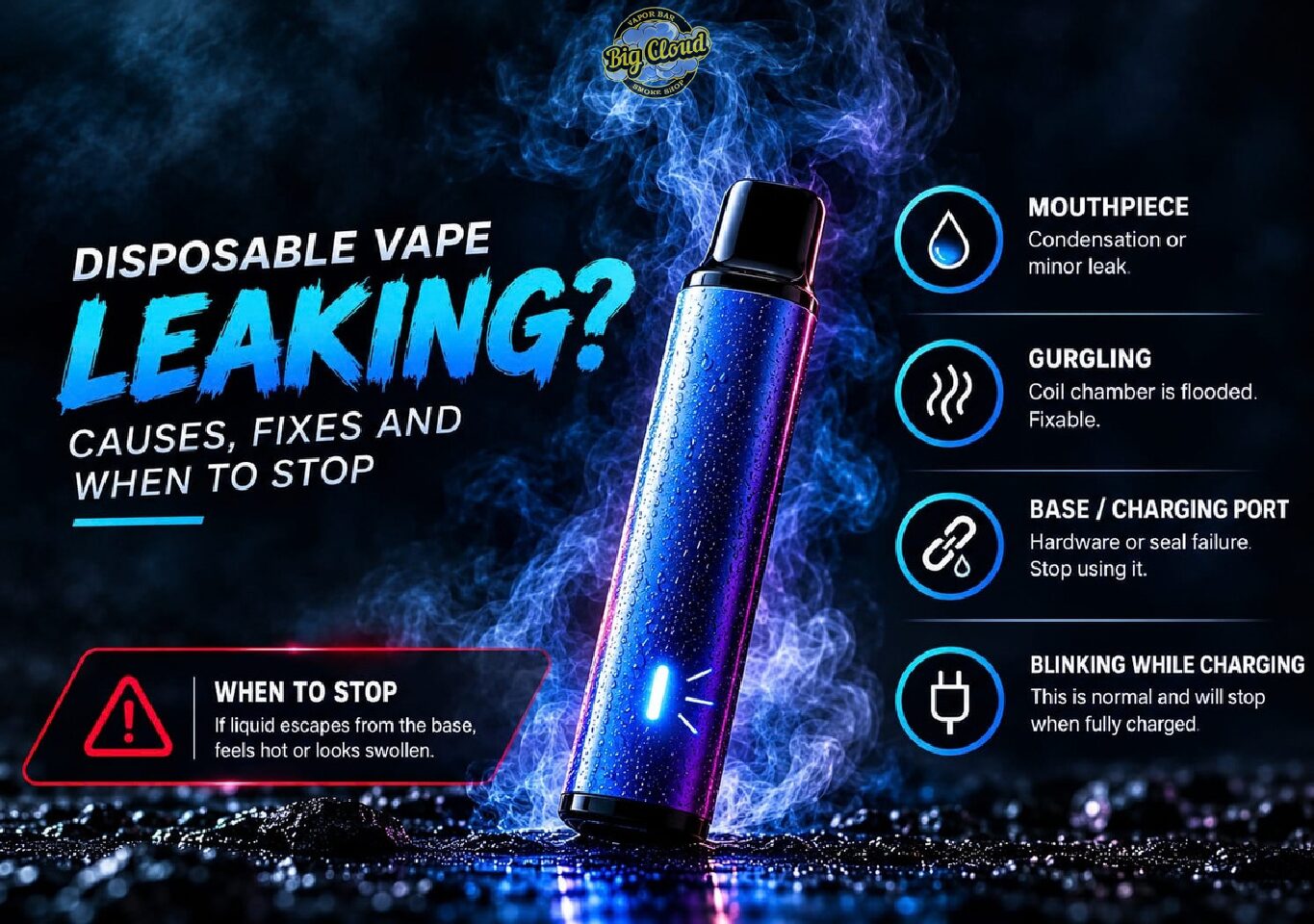
5. Expect pressure changes. Cabin pressure can cause a disposable to leak or gurgle. Keeping it upright helps, and our guide on a leaking disposable vape covers what to do if it does.
To find out more about the legal situation for vapes in Canada, see our article on whether disposable vapes are legal in Canada, and the full disposable vapes guide explains how these devices work.
FAQs
Can you bring a disposable vape on a plane in Canada?
Yes, in carry-on baggage or on your person. CATSA permits vaping devices in carry-on. They are not permitted in checked baggage because of lithium-battery fire risk.
What happens if you put a vape in checked baggage?
The bag may be pulled from the belt and the device removed before loading. Screening is designed to catch lithium batteries in checked luggage for exactly this reason.
Can you vape on a plane?
No. Vaping is prohibited on all Canadian flights, including in the lavatory, where smoke detectors register vapour. Charging a device in-flight is also not permitted.
How much e-liquid can you take on a plane?
E-liquid follows the standard carry-on liquids rule: containers of 100 ml or less, in one clear resealable bag of one litre or less.
Can I take my vape to Thailand or Singapore?
No. Both ban vaping products outright and enforce it against travellers, including in transit. Leave the device at home.